Benefits of Houseplants

It’s apparent that plants have spiked in popularity in recent years. Whether it’s a longstanding trend or a consequence of covid sequestering among other possible reasons, it’s no mistake that people are turning to plants and nature more frequently. As a fellow plant parent, I am beyond thrilled to see this trend blooming (ha!). Introducing flora into our spaces offers several benefits. Here are some of my favorite reasons for sharing a home with plant friends:
Mental Health
Now, this point is arguable if you’re not one who finds delight in plant care; however, interacting with houseplants tends to reduce stress in people. In a 2023 study investigating the effects of participating in plant care on adults, participants reported a calming feeling after watering plants. Based on the study’s findings, I imagine similar activities like repotting or just wiping and tidying leaves could lower stress as well. This is great news, especially if you already enjoy working with plants!
I am happy to share anecdotally that working with plants has helped calm my obsessive-compulsive disorder (OCD) symptoms. Indoor gardening has become a reliable method I use for grounding when I find myself trapped in rumination cycles; actions like feeling and smelling the soil, carefully pouring water, and the like bring me back to the present and away from whatever catastrophe my mind created. I also live with other chronic, physical illnesses, which admittedly have chipped away at my sense of wellbeing, and it can feel quite isolating. When I started collecting plants and subsequently nurturing them, I found that routine nurtured me as well. Surrounding myself with the vibrant, thriving greenery continues to help me find pieces of joy during the worst, homebound days. Anyway, moving on! *secretly wipes away happy tears*

Air Quality
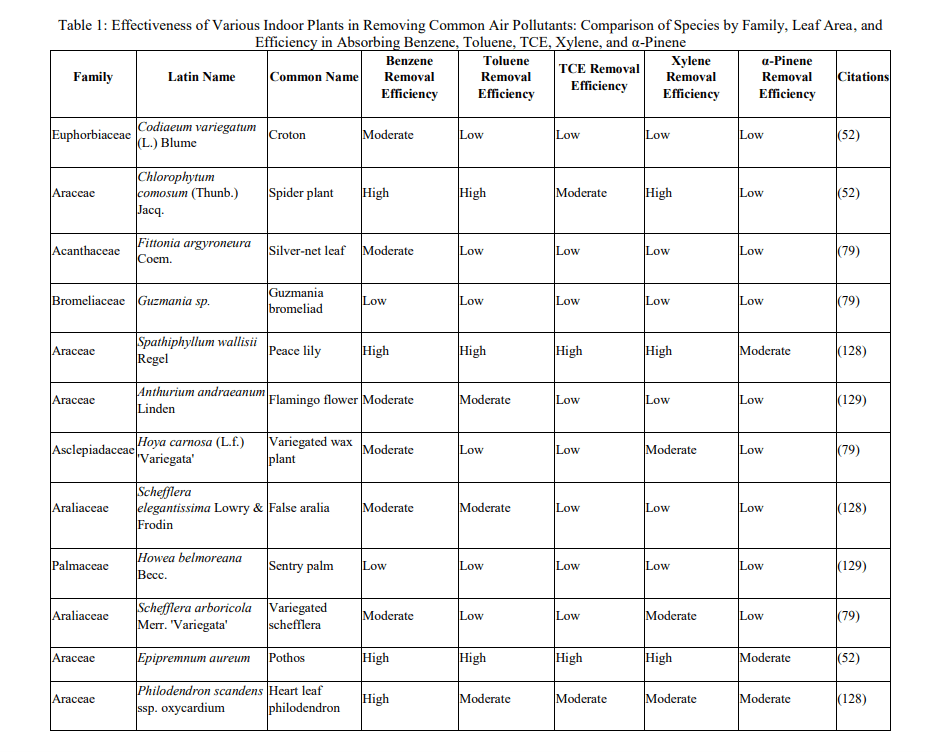
It’s a known fact that plants take in carbon dioxide and give off oxygen, but their relationship with surrounding air is a lot more complex. Aside from releasing oxygen and increasing humidity into the air around us, our plant friends also remove and metabolize indoor toxins. While most plants have this function, some plants are more effective than others depending on the toxic compound floating around. Spider plants, for example, are highly effective at absorbing benzene, toluene, and xylene, as shown in Table 1 below. This study highlights some other plants that are known to remove other compounds. Be sure to peruse the article further. Do you have any of the listed plants in your collection?
Decoration
An obvious benefit of keeping plants in your home is their decorative contribution to your unique style. Plants come in a variety of shapes, sizes, and colors. Most plants will showcase their beautiful green shades, but if you’re one who likes pops of color, one of my favorites is the Pink Princess Philodendron, a lovely climbing plant decorated with variegated deep green and pink leaves. There’s also African Violets; their leaves are green, plump, and fuzzy, but their blooms come in a variety of colors. Now, if you prefer something darker and perhaps spoooOOOooOooOOoooky, I recommend the Raven ZZ, a low maintenance, stunning plant with a shadowy, almost black coloring in its leaves and stalks. This particular ZZ is on my personal wish list; it’s a stunning specimen.
Depending on your home environment too, there are plant options for varying light levels and even drier air. Another favorite plant of mine is the snake plant, which, like all its varieties, can withstand drying out for some time and is tolerant of lower light conditions. Snake plants are a great starter plant due to their hardiness. And they’re cute, so there’s that of course.
One of my best decisions was to embrace my mom’s green thumb gene and allow plants to infiltrate my space. There is a peaceful, mutualistic exchange that occurs with housing and caring for plants. It can be difficult at times, but plant care is limitlessly rewarding, from seeing that new leaf gently unfurl to realizing a baby root is starting to sprout from a fresh cutting. It’s a symbiotic relationship because the plants benefit from their people keeping them happy and, well, alive. In return, they deliver potential health benefits and beauty! Have I convinced you? I hope so!
Let me know in the comments which plant is your favorite😊
Sources
Hassan, A., Deshun, Z. Promoting adult health: the neurophysiological benefits of watering plants and engaging in mental tasks within designed environments. BMC Psychol 11, 310 (2023). https://doi.org/10.1186/s40359-023-01362-5
Talaie, A., & Ponraj, M. (2024). Impact of Houseplants on Reducing Indoor Air Pollution. Journal of Environmental Treatment Techniques, 12(3), 1-13.

 Florauna Plant Shop
Leave a comment